

Pond Aeration for Water Clarity: A Complete Guide
Table of Contents
Last Updated: October 5, 2026
How Pond Aeration Improves Water Clarity
Pond aeration water clarity works by introducing oxygen into water, which fuels beneficial bacteria that break down organic matter and reduces the nutrients that feed algae blooms. At Cramer Machine Works LLC., we've designed aeration systems specifically for property owners and marina operators who struggle with cloudy water and seasonal algae problems. The process is straightforward in concept but delivers measurable improvements when properly sized and maintained.

Dissolved Oxygen and Beneficial Bacteria
The foundation of pond aeration's effectiveness lies in dissolved oxygen levels. When water lacks sufficient oxygen, anaerobic bacteria dominate, producing hydrogen sulfide and methane that create foul odors and sludge accumulation. Aerators inject oxygen throughout the water column, shifting the microbial balance toward aerobic bacteria that consume decaying organic matter efficiently.
Beneficial bacteria thrive in oxygenated environments and actively decompose leaves, dead algae, fish waste, and other organic debris. This decomposition process is essential, without it, organic matter accumulates as sludge on the pond bottom, consuming available oxygen and creating a cycle that worsens water quality. The aerobic bacteria essentially clean the pond from the inside out, working continuously to process what would otherwise become toxic buildup.
The timeline matters here. Most pond owners expect immediate clarity, but bacterial colonies need time to establish and proliferate. Within the first two to four weeks, you'll notice improved oxygen circulation. After six to twelve weeks of consistent operation, the bacterial populations reach levels that meaningfully reduce organic accumulation.
Breaking Down Organic Matter and Sludge
Organic matter, fallen leaves, dead plants, fish waste, and decaying algae, is the primary fuel for poor water quality. Without aeration, this material settles to the bottom and decomposes anaerobically, releasing nutrients that feed algae blooms and consuming oxygen in the process. It's a downward spiral: more sludge means less oxygen, which means less bacterial decomposition, which means more sludge.
Aeration reverses this cycle by keeping oxygen available throughout the water column. Aerobic decomposition is dramatically more efficient than anaerobic processes. The beneficial bacteria can process organic matter at a rate that prevents sludge accumulation, particularly when aeration runs during the active growing season.
For ponds with significant existing sludge, aeration alone may take months to clear. The bacterial populations must grow large enough to process the accumulated material. However, once established, ongoing aeration prevents new sludge from building up to problematic levels. This is why seasonal aeration during algae season is often more effective than sporadic operation, consistency allows bacterial colonies to maintain their population and processing capacity.
Does Pond Aeration Help Water Clarity?
Yes, pond aeration water clarity improves directly by supporting the biological processes that remove suspended particles and reduce algae growth. The mechanism is well-established: more oxygen enables beneficial bacteria to decompose organic matter, which removes nutrients from the water column and reduces the food source for algae. Clearer water is the natural result of this cleaner ecosystem.
What Results to Expect and Timeline
Expect visible improvement within four to six weeks of consistent aeration, though the timeline varies based on pond size, depth, existing sludge load, and the aeration system's capacity. Small, shallow ponds with minimal sludge may show results faster. Large, deep ponds with years of accumulated organic matter require longer.
Most property owners report:
Week 1-2: Improved water circulation and oxygen distribution
Week 3-6: Initial reduction in algae and slight clarity improvement
Week 8-12: Noticeable clearing and reduced odor
Week 16+: Sustained clarity if aeration continues
The key variable is consistency. Intermittent aeration produces inconsistent results because bacterial populations fluctuate. Year-round aeration, or at minimum seasonal aeration during warm months when algae grows, maintains the bacterial colonies needed for sustained clarity.
Realistic expectations matter. Aeration won't turn a severely cloudy pond crystal clear in days. What it will do is establish the biological conditions for gradual, sustained improvement. If a pond has been neglected for years, the organic load is substantial, and clearing it takes time. However, once clarity improves, maintaining it with continued aeration is far easier than achieving it initially.
Pond Aeration System Types and How They Work
Different aeration approaches suit different pond conditions. The right choice depends on pond depth, surface area, and your primary goal, whether you're targeting clarity, algae control, or year-round ice prevention.
Surface Aeration and Floating Fountains
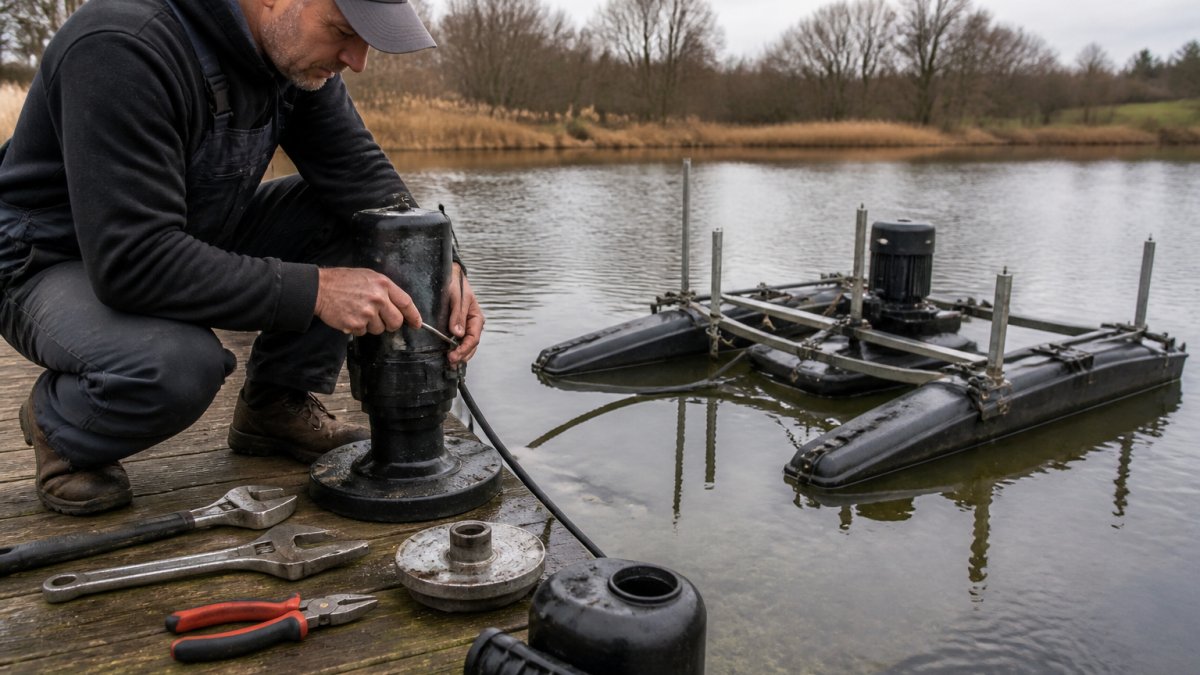
Surface aerators, including floating fountain systems, draw water from the pond and spray it into the air, exposing it to atmospheric oxygen. The Naiad surface aerator from Cramer Machine Works LLC. uses this approach, creating visible water movement that both oxygenates and circulates the pond.
Surface aeration excels in shallow ponds and ponds where visual appeal matters. The fountain effect is attractive and immediately visible. However, surface aeration primarily oxygenates the top layers of water. In deep ponds, the bottom layers remain stagnant unless the system is sized large enough to create strong circulation.
Surface systems are straightforward to install and maintain. They're exposed, making them easy to access for cleaning and repair. For ponds under six feet deep with modest organic loads, surface aeration is often sufficient and cost-effective.
Subsurface Aeration and Diffused Air Systems
Subsurface aeration, including diffused air systems like the Sub Mix-Aire from Cramer Machine Works LLC., delivers air from the bottom of the pond. Compressed air is forced through diffusers, creating rising bubbles that oxygenate the water and pull cooler, oxygen-rich water from the bottom to the surface.
Subsurface systems are more effective in deep ponds because they target the bottom layers where sludge accumulates. The rising air bubbles create circulation throughout the entire water column, not just the surface. This makes subsurface aeration superior for ponds deeper than six feet or ponds with significant sludge problems.
The Sub Mix-Aire combines mechanical and diffused air aeration, offering flexibility. It works year-round and is particularly effective during winter, when surface ice would block a floating fountain. For marinas in regions where ice formation occurs, subsurface systems are essential.
Subsurface systems require more installation work, diffusers must be positioned on the pond bottom and air lines run from the compressor. However, the equipment is largely hidden, which some property owners prefer aesthetically.
How Long to Run a Pond Aerator for Best Results
Continuous operation during the active growing season typically delivers the best results. Many pond owners run their aerators 24/7 from late spring through early fall, then reduce or stop operation during winter depending on the system type and climate.
Seasonal Operation and Year-Round Aeration
Seasonal aeration targets the months when algae grows most aggressively and organic decomposition is most active. In most climates, this means May through September or October. Running aeration during these months maintains oxygen levels and bacterial populations when they're most needed.
Year-round aeration, particularly with subsurface systems, prevents ice formation and maintains some level of oxygen exchange even in winter. For marinas and properties where waterfowl safety is a priority, year-round operation of a de-icer and aerator combination like the Isvinder system keeps open water available.
The question of whether to run aerators 24/7 or on a schedule depends on your goals and budget. Continuous operation maintains the most consistent water quality. However, many ponds show acceptable results with 12-16 hours of daily operation, which reduces energy costs.
Stopping aeration abruptly in fall can temporarily worsen water quality as bacterial populations decline and organic matter accumulation resumes. A gradual reduction in operating hours, rather than sudden shutdown, helps maintain stability.
Pond Aeration Disadvantages and Limitations
Aeration is powerful, but it's not a universal fix. Understanding its limitations helps set realistic expectations and prevents wasted investment.
When Aeration Alone Cannot Fix Cloudy Water
Cloudiness has multiple causes, and not all respond equally to aeration. Suspended clay particles, for example, don't settle faster because of aeration, they remain suspended regardless of oxygen levels. Bacterial blooms, which turn water greenish and cloudy, respond to aeration over time, but immediate clearing won't happen.
Aeration works best when cloudiness is caused by algae, organic decomposition, or oxygen depletion. If cloudiness is caused by high nutrient influx, aeration alone won't solve the problem, you'll also need to reduce nutrient inputs.
Additionally, aeration requires adequate pond volume and depth to be effective. Very shallow ponds (under two feet) and very small ponds (under 500 gallons) may not benefit significantly from standard aeration systems. The oxygen-to-volume ratio and circulation patterns in tiny ponds make aeration less impactful.
Aeration also cannot fix mechanical issues like blocked spillways or inadequate water exchange with source water. If a pond is fed by stagnant groundwater or receives no fresh water input, aeration improves conditions but cannot replicate the benefits of water circulation.
Algae Control and Nutrient Distribution
Aeration reduces algae by two mechanisms: it supports bacteria that consume organic matter (removing algae food), and it circulates nutrients throughout the water column, preventing stratification where algae blooms concentrate.
Algae thrives in warm, nutrient-rich, oxygen-poor water. Aeration addresses three of these factors directly. By maintaining oxygen levels, aeration prevents the conditions that favor algae dominance. By supporting bacterial decomposition, aeration reduces the organic debris that algae feeds on.
Nutrient distribution matters because algae blooms often form in stratified ponds where nutrients concentrate at the surface. Aeration breaks this stratification, distributing nutrients throughout the water column where they're less likely to fuel concentrated algae growth. This doesn't eliminate nutrients, it disperses them, which reduces the likelihood of explosive algae blooms.
However, if nutrient inputs are extreme (heavy fertilizer use, large fish populations, waterfowl waste), aeration will slow algae growth but not prevent it entirely. Controlling external nutrient sources is equally important as maintaining aeration.
Measuring Progress and Monitoring Dissolved Oxygen
Tracking dissolved oxygen levels gives you concrete data on whether your aeration system is working. Dissolved oxygen is measured in milligrams per liter (mg/L), and most aquatic life thrives at levels above 5 mg/L.
Simple dissolved oxygen meters are affordable and easy to use. Measure oxygen levels at different depths, surface, mid-water, and bottom, to confirm that aeration is circulating oxygen throughout the pond.
Water clarity can be measured with a Secchi disk, a simple white disk lowered into the water until it disappears from view. The depth at which it vanishes indicates clarity. Tracking this measurement weekly during aeration season gives you objective evidence of improvement.
Many property owners also monitor algae presence visually and note odor changes. These are less precise but still useful indicators. Reduced odor and less visible algae suggest that aeration is working, even if clarity improvement is gradual.
Cloudy water and seasonal algae are persistent problems for pond owners, but they're also solvable with the right approach. Whether you need seasonal algae control or year-round operation for ice prevention, our systems are designed to scale to your pond's specific depth, area, and conditions.
Frequently Asked Questions
How long does it take for pond aeration to improve water clarity?
Improvement timelines vary based on pond size, initial water quality, and aeration intensity. Many pond owners notice clearer water within 1-3 weeks of consistent operation, though significant sludge reduction may take several months. Dissolved oxygen levels typically rise within hours of startup. Patience and consistent operation yield the best results, especially if organic matter buildup is severe.
Can aeration make pond water cloudy at first?
Yes. When aeration begins, it can temporarily stir up settled particles and muck, making water appear cloudier before it clears. This is normal and usually resolves within days to a week as particles settle and beneficial bacteria establish themselves. If cloudiness persists beyond two weeks, other water quality issues may be at play, and you should test dissolved oxygen and nutrient levels.
What are the main disadvantages of pond aeration?
Aeration requires ongoing electricity and maintenance, and it cannot solve all water clarity problems alone. In very shallow ponds or those with heavy nutrient loads, aeration may be insufficient without additional treatments like chemical dosing or dredging. Winter aeration also demands equipment designed for freezing conditions. Operating costs and equipment upkeep should be factored into your decision.
How many hours per day should you run a pond aerator?
Most ponds benefit from 8-24 hours of daily aeration, depending on size, depth, and fish load. Smaller ponds or those with lower bioloads can run 8-12 hours daily. Larger ponds or heavily stocked systems may need continuous or near-continuous operation. Seasonal adjustments apply: summer typically requires more aeration due to higher oxygen demand, while winter systems focus on preventing ice formation and maintaining a small opening for gas exchange.


Comments