

How to Prevent Pond Ice Damage: 2026 Winter Guide
Table of Contents
How Ice Formation Threatens Your Pond Structure
Table of Contents
How Ice Formation Threatens Your Pond Structure
Ice Jacking and Liner Damage
Pond Deicer Installation for Open Water
Placement and Power Cord Safety
De-icing Effective Area
Ensuring Fish Safety in Frozen Ponds
Protecting Docks and Boats
DIY vs. Professional Installation Safety
Frequently Asked Questions
Last Updated: October 2, 2026
How Ice Formation Threatens Your Pond Structure
Ice does not just sit on a pond. It expands, pushes, and lifts, and that force causes most pond ice damage. Preventing pond ice damage starts with understanding what freezing water does to a liner, a dock, or a pump housing. At Cramer Machine Works LLC., we build de-icing equipment for ponds and marinas.
Ice Jacking and Liner Damage
Ice jacking is the upward movement of ice that pulls on anything frozen into it. As temperatures rise and fall, the ice will shift, this can be particularly damaging to boats and pilings on docks, the constant shifting ice can break or otherwise damage them.
Pond Deicer Installation for Open Water
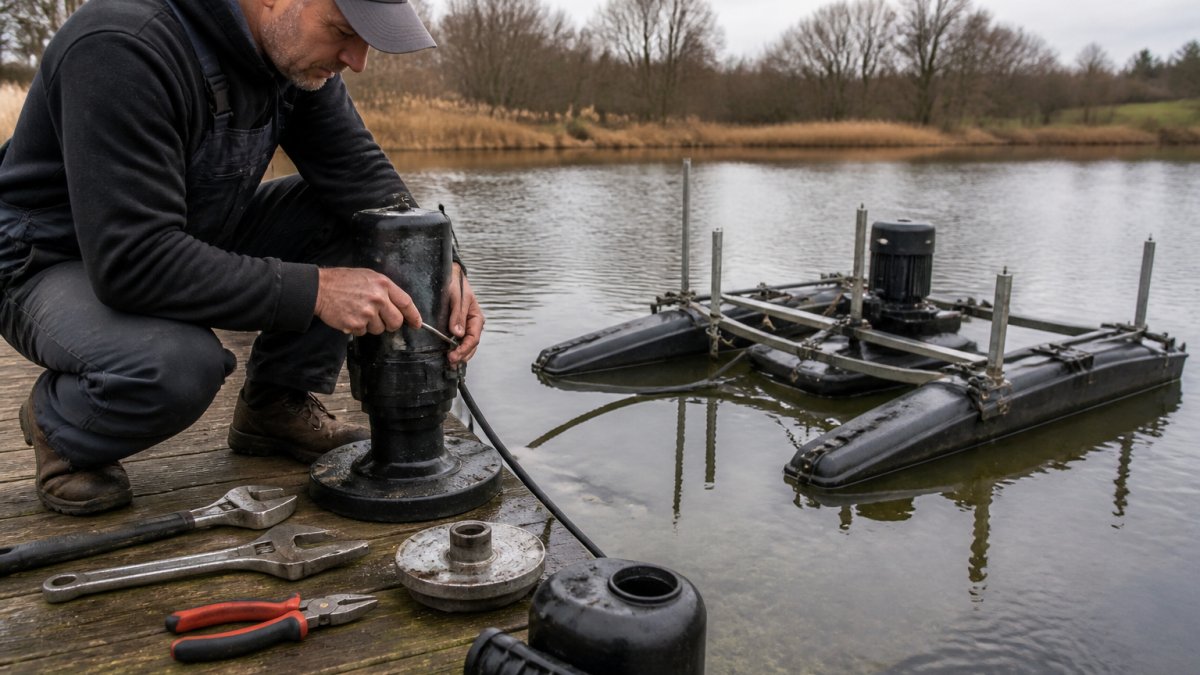
Pond deicer installation keeps a hole open in the ice so gases can escape and oxygen can enter. A floating de-icer or pond heater creates a small opening for oxygenation AND offers a place for waterfowl to rest and escape deadly predators.

Person in winter gear installing a round de-icer to prevent pond ice damage in a frozen outdoor water feature.
Placement and Power Cord Safety
Place the de-icer near the deepest part of the pond, away from the edge, this is particularly so you have the maximum amount of warm water and is in a good central area for waterfowl to get away from potential predators.
Power cord safety matters more than most people realize:
Use a GFCI outlet for every de-icer.
Check cords for tears in the jacket before installation.
Watch Out Plugging a de-icer into a standard outdoor outlet without GFCI protection is common, but does run the risk of damaging the unit or potentially a person if lighting hits it or someone comes into direct contact with the motor.
De-icing Effective Area
A pond de-icer can generally keep a 8 foot area free of ice, with an additional 8 feet for every foot of depth to a maximum of 8 feet. Now this does depend on the availability of warmer water and how long the particular cold spell lasts. A de-icer can only do so much when it has been -10 degrees for 2 or more weeks.
Ensuring Fish Safety in Frozen Ponds
Fish safety in frozen ponds comes down to oxygen and gas exchange. Fish go into winter dormancy and need very little food, but they still need dissolved oxygen and a way for toxic gas to escape.
Protecting Docks and Boats
Ice jacking can be brutal on docks and pilings in the water, as ice shifts it can snap pilings and potentially even break boat hulls if they’re left in the water. The mechanism matches liner edge lift: ice freezes around the piling, then a water-level rise or temperature swing lifts the whole ice sheet, and the piling with it.
DIY vs. Professional Installation Safety
Most homeowners can install a de-icer or aerator themselves. .
Do it yourself if:
You are using a plug-in de-icer on a pre-existing GFCI outlet.
You are able to safely install unit in the water, whether it be under the dock or out in more open water
Call a professional if:
You need new electrical service at the water.
The pump sits in deep water or under a dock.
It is important to remember to not touch or handle the unit while the unit is plugged in, if not the electrical risk than for the risk that you could be injured by the propeller.
Frequently Asked Questions
How long does it have to be below freezing for a pond to freeze?
A pond's surface begins forming ice when air temperatures stay below 32°F for several consecutive days, but depth matters. Shallow ponds under 24 inches deep can freeze within 48 to 72 hours of sustained freezing weather. Deeper ponds take longer because the large volume of water holds heat. Wind exposure, snow cover, and dissolved oxygen levels also affect how quickly ice forms. Monitoring water temperature and starting pond ice damage prevention steps before the first hard freeze gives you the best protection.
Can fish survive in a frozen over pond?
Yes, fish can survive winter in a frozen pond if the water below the ice stays oxygenated and the pond is deep enough. Fish enter a state of winter dormancy, slowing their metabolism and staying near the bottom where water stays around 39°F. The danger is not the cold itself but low dissolved oxygen. A pond deicer or aerator that keeps a hole open in the ice allows gas exchange and prevents toxic gases from building up, which is essential for fish safety in frozen ponds.
Should I turn off my pond pump in the winter?
It depends on your setup. Inline or submersible pumps that pull water from the bottom can be left running if they are rated for winter use and positioned to avoid freezing. However, most pond owners shut down and remove pumps during winterizing pond pumps to prevent freeze damage to the impeller and housing. If you keep a pump running, check it weekly for ice blockages. A dedicated deicer or aerator is a safer option for maintaining open water.
How do I protect my pond liner from ice expansion?
Ice jacking happens when expanding ice pulls on the liner and causes punctures or tears. To protect your pond liner, keep the water level consistent through winter, avoid draining the pond below normal level, and never walk on frozen ponds where the liner is shallow. Installing a deicer to maintain an open water hole reduces the pressure from a solid ice sheet. For material-specific ice damage prevention, EPDM liners flex better than rigid concrete in freeze-thaw cycles.
Get in Touch


Comments